
If there’s one rule in Spades that starts more arguments than all the others combined, this is it. Somebody leads a spade early in the hand, somebody else insists they’re not allowed to, and the whole table grinds to a halt while two people who learned the game in different houses dig their heels in. The rule itself is simple once it’s spelled out plainly, so let’s settle it for good.
The short version: you cannot lead a spade until spades have been “broken.” That’s the whole rule. The rest of this page explains what breaking spades actually means, how it happens, the one exception, and why the rule is there at all. If you want the broader rules around it, they’re on the Spades rules page.
What “Breaking Spades” Means
Remember that spades are trump, the most powerful suit on the table. To stop the game from turning into nothing but trump from the first card, Spades holds them back at the start. Until spades are broken, no one is allowed to lead with one. You can’t open a trick by laying down a spade.
“Breaking spades” is just the moment that restriction lifts. Once spades have been broken, they’re fair game, and anyone can lead one for the rest of that hand. It’s worth stressing that this only affects leading. You’re always allowed to play a spade when you’re following along to a trick someone else started, as long as the rules let you. The hold-back is purely about who gets to start a trick with trump.
How Spades Get Broken
Spades get broken the first time someone plays a spade because they couldn’t follow the suit that was led. Picture a trick where hearts are led. Every player has to follow with a heart if they have one. But if a player is completely out of hearts, they’re free to play any card they like, and that includes a spade. The instant a spade hits the table that way, spades are broken for the rest of the hand.
A couple of points that trip people up. You’re never forced to play a spade just because you’re out of the led suit. When you can’t follow, you may throw off a card from any other suit instead, and plenty of players do exactly that to hang onto their trumps. But the moment anybody does choose to play that first spade, the suit is broken for everyone. And it resets every hand: a fresh deal means spades start unbroken again, and the hold-back is back in force until someone breaks them anew.
The One Exception
There’s a single exception, and it’s a sensible one. If a player has nothing left in their hand but spades, and it’s their turn to lead, they’re allowed to lead a spade even if spades haven’t been broken yet. They simply have no other card to play, so the game lets them. It doesn’t come up often, but when it does, that player leads their spade and, in doing so, breaks the suit for everyone.
Why the Rule Exists
The rule exists to keep the early part of a hand interesting. Without it, the player holding the strongest spades could just lead them out one after another and steamroll the table before anyone had a chance to play their side suits. By holding spades back, the game forces players to work through hearts, diamonds, and clubs first, saving trump for when it matters.
It also does something quietly important for the bidding. A Nil bidder needs room to shed dangerous cards before the trumps start flying, and the breaking rule gives the hand that breathing space. Take the rule away and Nils would be far harder to protect. So while it feels fussy the first few times, the breaking rule is doing real work to keep the game balanced.
An Example at the Table
Say West leads the king of hearts to start a trick. North follows with a small heart, because North has hearts and has to. East, though, is fresh out of hearts. East could throw away a low club, but instead chooses to play the four of spades. That little four wins the trick, because it’s trump, and just like that, spades are broken.
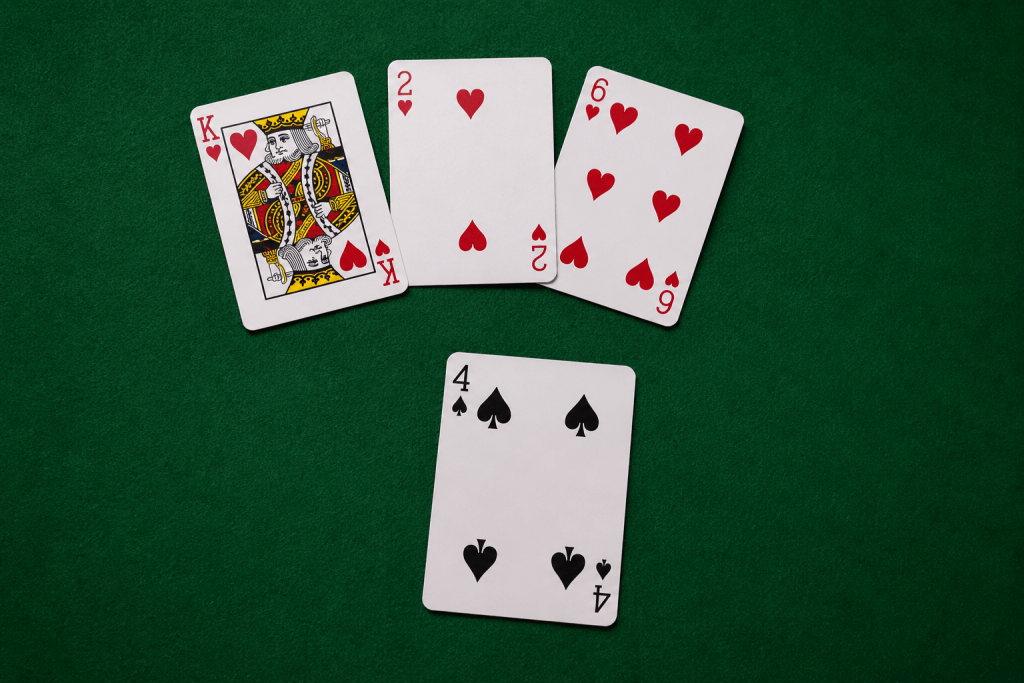
From that point on, any player can lead a spade whenever it’s their turn. A few tricks later, South leads the ace of spades to open a trick, which is now perfectly legal because the suit was broken back when East trumped in. Earlier in the hand, South leading that same ace would have been against the rules. If you’d like to see how this fits into a full hand from the deal onward, there’s a worked example on the how to play page.
The Questions That Start Arguments
Most of the disputes around this rule come down to the same handful of questions, so here are the plain answers.
Can you lead a spade on the very first trick? No. The player opening the hand has to lead something other than a spade, since spades haven’t been broken yet.
Do you have to break spades if you can follow suit? No. If you hold a card in the suit that was led, you must follow with it. Breaking spades only ever happens when someone is void in the led suit.
Are you forced to play a spade when you can’t follow? No again. When you’re out of the led suit you may play any card, and lots of players deliberately keep their trumps back and throw off a different suit instead.
Once spades are broken, can anyone lead them? Yes. The restriction lifts for the whole table for the rest of that hand, then resets on the next deal.
A word of caution: some groups play house versions of this rule, like requiring spades to be broken before they can ever be played, or letting players lead spades whenever they want. None of those are the standard game, but they’re out there, so it pays to ask how your table plays before the first hand rather than after the first quarrel. Leading a spade at the wrong moment is one of the more common slip-ups beginners make, and it sits alongside a few others on the common mistakes page.
Get this one rule straight and you’ll have skipped the single biggest source of Spades arguments before it ever starts.