
Bags are the slow leak in a game of Spades. One at a time they look harmless, almost like a little bonus, and that’s exactly what makes them dangerous. A team can play perfectly decent Spades all night and still lose because nobody was watching the bag count. This page explains what bags are, why ten of them cost you 100 points, and the handful of habits that keep you out of trouble.
If you want the full scoring system around all this, it’s on the Spades scoring page, and the basic rules of play are on the Spades rules page. Here we’re zooming in on bags alone.
What a Bag Is
A bag is an overtrick, which is just a fancy word for a trick you won beyond what your team bid. If your side bids 5 and ends up taking 7 tricks, those 2 extra tricks are bags. Each one is worth a single point on the hand, so they do add a tiny bit to your score in the moment.
That small bonus is the bait. Because each bag gives you a point, it’s easy to treat them as harmless or even welcome. They aren’t. The single point you get now is borrowed against a much bigger bill coming later.
Why That Little Overtrick Is Dangerous
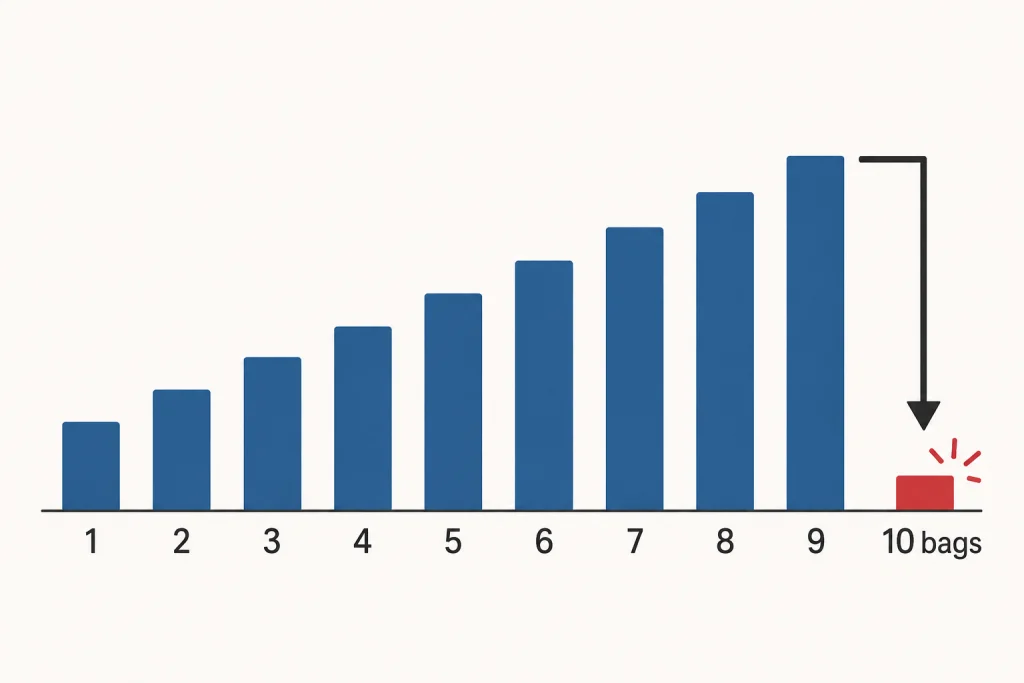
Bags don’t reset at the end of each hand. They pile up on a running tally that follows your team through the whole game. And the moment that tally reaches 10, your team is hit with a 100-point penalty. The rule is sometimes called the sandbag rule, and “sandbagging” is the habit it’s meant to punish: deliberately bidding low to play it safe and quietly hoarding overtricks.
Think about what that means. Ten bags spread across a game feel like nothing while they’re happening, a point here and a point there, and then all at once they erase a hundred points of hard work. Plenty of games are decided not by who played the boldest hands but by who let their bag count creep up without noticing.
How the 100-Point Penalty Works
Here’s the mechanic in full. Every overtrick your team takes goes onto the tally. You still collect the single point for each one in the hand it happens. But the instant the tally ticks over to 10, you lose 100 points, and any bags beyond the tenth carry over to start the next cycle.
A worked example makes it clear. Say your team is sitting on 8 bags from earlier hands. This hand you bid 4 and end up taking 7 tricks. You made your bid, so you score 40, plus 3 points for the 3 bags. That’s 43 for the hand on its own. But those 3 bags push your tally from 8 up to 11, which crosses the line at 10. So you take the 100-point penalty, leaving you at minus 57 for the round, and 1 leftover bag carries forward to start your tally fresh at 1. One careless hand turned a perfectly good 43 into a serious loss.
How to Avoid Bags
The root cure for bags is accurate bidding. Most bag trouble comes from teams bidding well under what their hands can take, then helplessly winning trick after extra trick. Bid close to what your cards are truly worth and a lot of the problem solves itself. The Spades bidding page covers how to count a hand honestly.
The in-hand cure is learning to lose tricks on purpose. Once your team has made its bid, every trick after that is a bag you don’t want, so stop trying to win. Play your low cards, duck under the other team’s winners, and let them have the tricks you no longer need. Dump your high cards early when you can see your bid is already safe, because a stranded ace late in the hand has a nasty way of winning a trick you’d rather have ducked. Grabbing needless tricks at the end of a hand is one of the more common slip-ups, and it sits among the others on the common mistakes page.
It also pays to watch the count, both your own and the other team’s. When your tally is sitting at 8 or 9, treat every extra trick like it’s radioactive and play the back half of each hand with real care.
Turning Bags Against Your Opponents
Here’s a tactic that separates thoughtful players from casual ones: you can hand bags to the other team on purpose. If the opposing side has already made its bid, any further tricks they win become their bags, not yours. So when you’re out of the running on a hand, you can deliberately give the opponents tricks they don’t want, nudging their tally toward that 100-point cliff.
It feels strange the first time, almost like helping them, since you’re letting them win tricks. But you’re really loading sandbags onto their score for later. Against a team that’s already near 9 bags, quietly feeding them overtricks can be the most damaging thing you do all hand.
When to Take a Bag on Purpose
For all the warnings, bags are not something to avoid at literally any cost. Sometimes taking an overtrick is the right play. The clearest case is setting the other team. If grabbing one extra trick stops your opponents from making their bid, they lose 10 points for every trick they bid, which is a far bigger swing than the single bag it costs you. A bag is a point; a set can be 50 or 60. Take the bag and set them every time that trade is on offer.
One last note: not every group plays the bag rule the same way. Some drop the penalty entirely to keep things friendly, some use a smaller 50-point version, and some add their own wrinkles. It’s worth settling which version your table uses before the first hand. Once you’ve got bags under control, the wider question of how they fit into smart partnership play is covered on the Spades strategy page.