
A Nil bid is the boldest call in Spades, and landing one feels better than just about anything else at the table. You stand up and promise to win nothing at all, then spend the next thirteen tricks dodging every single one. Pull it off and your team jumps 100 points. Slip up and take just one trick, and you hand those same 100 points straight back.
Because the swing is so big, Nil is worth understanding properly before you reach for it. This page covers what Nil and Blind Nil actually are, how they score, what a safe Nil hand looks like, and how you and your partner play to protect one. If you’re still new to bidding in general, start with the Spades bidding page and come back to this when you’re ready for the risky stuff.
What a Nil Bid Means
Nil is a bid of zero. When it’s your turn to bid, instead of naming the number of tricks you expect to win, you declare Nil, which is a promise to win no tricks at all that hand. It’s made during the normal round of bidding, the same way every other bid is, and the full rules of that are on the Spades rules page.
Here’s the part newcomers miss: when you bid Nil, your partner still makes an ordinary bid. So your team has two separate jobs that hand. You have to take zero tricks, and your partner has to make their own number. The Nil is judged entirely on its own, not pooled into a combined contract.
How Nil Scores
A successful Nil is worth 100 points, added on top of whatever your partner scores for their bid. So if your partner bids 4 and makes it while you go clean with your Nil, that’s 40 points for the partner’s tricks plus 100 for the Nil, a tidy 140-point hand.
If the Nil fails, meaning you win even one trick, your team loses 100 points. On top of that, every trick you accidentally took counts as a bag against your team, which can come back to sting later. Your partner’s bid is still scored on its own, based on the tricks they won. The complete scoring picture, with every situation laid out, is on the Spades scoring page.
What Makes a Good Nil Hand
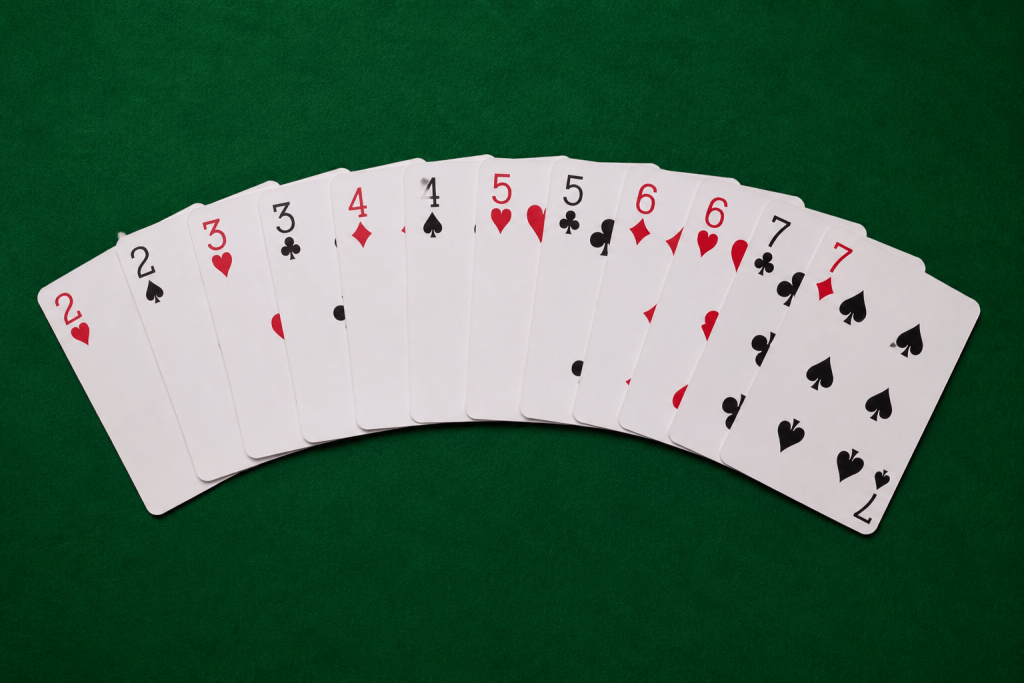
A safe Nil starts with a hand full of low cards. The fewer cards you hold that could be forced to win a trick, the better your odds. Walk through your hand and ask of each card, “could this one get stuck winning?”
The dangerous cards are the high ones you can’t easily get rid of. Aces are obvious trouble. So is a king with no small card beneath it to throw away first. Worst of all are high spades, because spades are trump and a high one wins almost any trick it’s played on. A hand for Nil wants no spades at all, or only the lowest ones, like a two or a three.
Watch out for awkward shapes too. A singleton, where you hold just one card in a suit, is risky, because when that suit is led you have to play your only card, and if it happens to be high it wins. A lone high card with no low cards to hide behind is exactly the kind of thing that busts a Nil. The dream hand is a spread of low cards across the suits, a couple of small spades at most, and nothing that’s likely to be the highest card left when a suit is led.
Nil isn’t always optional. In standard Spades, choosing whether to bid Nil is entirely up to you — bid it if your hand supports it, skip it if it doesn’t. Some variants remove that choice entirely. In Suicide Spades, for example, one partner on each team is required to bid Nil every single hand, regardless of what they’re holding — see Suicide Spades Rules for how that changes strategy.
Playing Out a Nil
Once you’ve bid Nil, your whole job is to lose. Every trick, you want to play just under the winning card, ducking beneath whatever is taking it. When a trick is clearly going to someone else, use the chance to throw away your most dangerous card, the highest one you’re worried about. Get rid of those early, while you still can.
The thing that ruins Nils more than anything is getting stuck with the lead. If you win a trick, you then have to lead the next one, and your own card might just win again. The nightmare is reaching the end of the hand holding nothing but cards that beat what’s left. Keep an eye on which high cards have already been played so you know what can still catch you. The most common ways a Nil falls apart are gathered on the common mistakes page, and they’re worth reading before you try one.
How Your Partner Protects Your Nil
A Nil is a two-person effort, and the partner does most of the heavy lifting. The moment you bid Nil, your partner becomes the workhorse, taking tricks so that you’re free to dump your dangerous cards underneath.
A good partner leads high to draw out the big cards from the opponents and to give you a trick where you can safely sluff off a worry. They try to win the tricks in the suits where you look exposed, getting there before you’re forced to. And if your card starts creeping toward winning, a sharp partner will overtake it, snatching the trick away to keep you clean. A Nil with an attentive partner stands a real chance. A Nil with a partner who isn’t paying attention usually goes down.
Blind Nil
Blind Nil is the same idea, dialed up to reckless. You declare it before you’ve looked at a single card, betting on a hand you haven’t even seen. The reward and the penalty both double: a successful Blind Nil is worth 200 points, and a failed one costs you 200.
Most groups only allow Blind Nil as a comeback move, when your team is trailing by a set margin, often 100 points or more. Some let you swap a card or two with your partner after declaring, to improve your odds. Those conditions vary from table to table, so it’s worth checking how your group plays it before someone calls one. As a rule, Blind Nil is only worth the gamble when you’re far enough behind that ordinary play won’t catch you up. If the game is close, the risk isn’t worth it.
When to Leave Nil Alone
For all its appeal, Nil is a bid to respect, not to chase. If your hand holds aces, high spades, or an awkward high singleton, pass on it and bid a normal number instead. And don’t fall into the trap of bidding Nil just because your hand looks weak. A weak hand with one stuck high card is exactly the kind that busts, and a plain bid of 1 or 2 would have scored fine.
Bid Nil when the hand is truly safe and the points are worth it, play it patiently, and lean on your partner to cover you. When you want to fold all of this into your wider game, including how Nil fits with your overall bidding and bag control, the Spades strategy guide carries it forward.